Why embroidered RFID antennas instead of conventional foil tags?
Traditional RFID inlays based on film or plastic are proven for many applications and cost-effective in high-volume production. However, if a component is to remain textile, is subjected to repeated washing, strong bending, or widespread pressure, film inlays reach their limits. They are stiffer than the surrounding fabric, can become visible under insufficient pressure, and can detach from the substrate under bending stress.
This is not a theoretical problem. In industrial rental laundry, detached inlays lead to misreads during inventory tracking. With protective equipment, rigid tags under the garment create pressure marks.
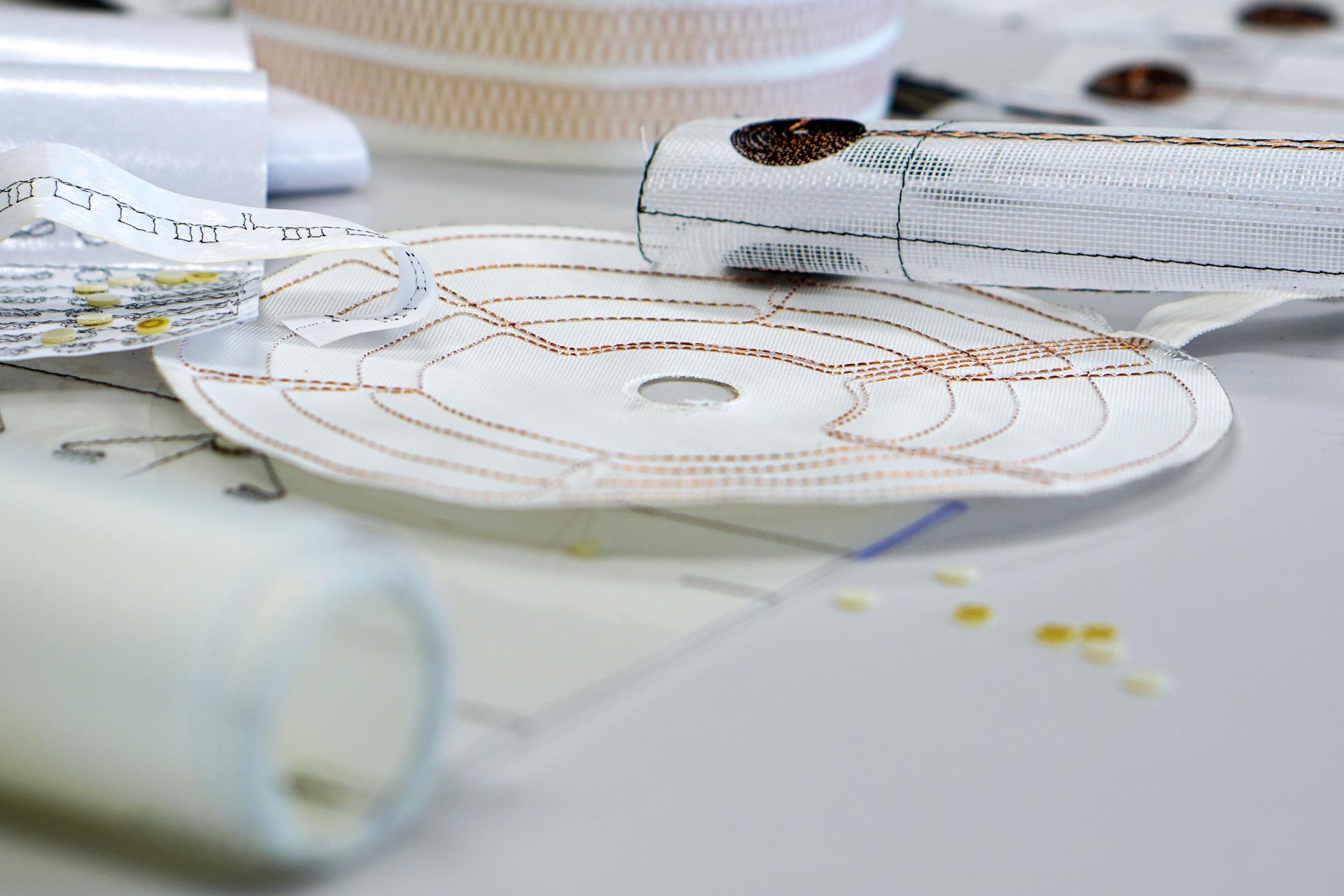
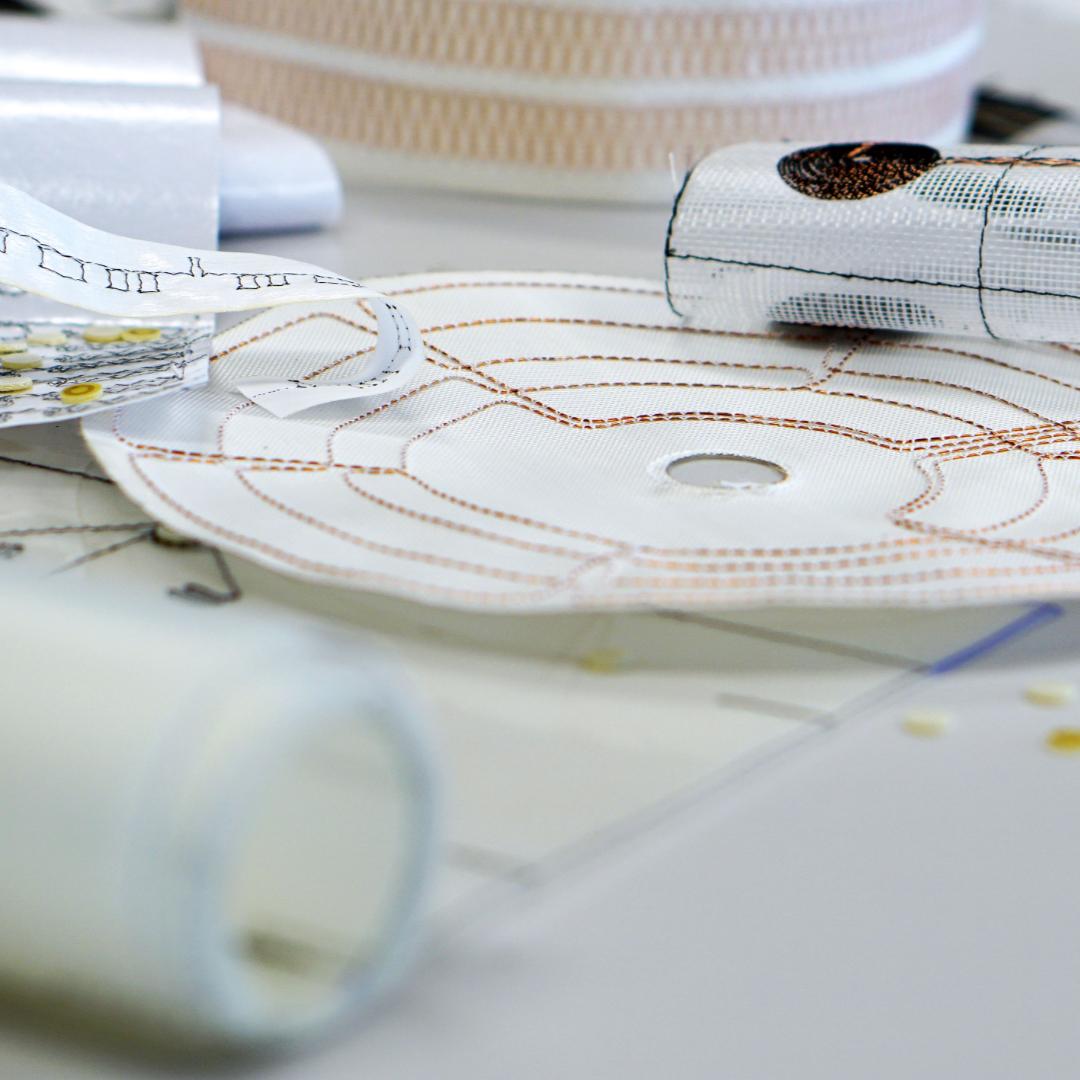
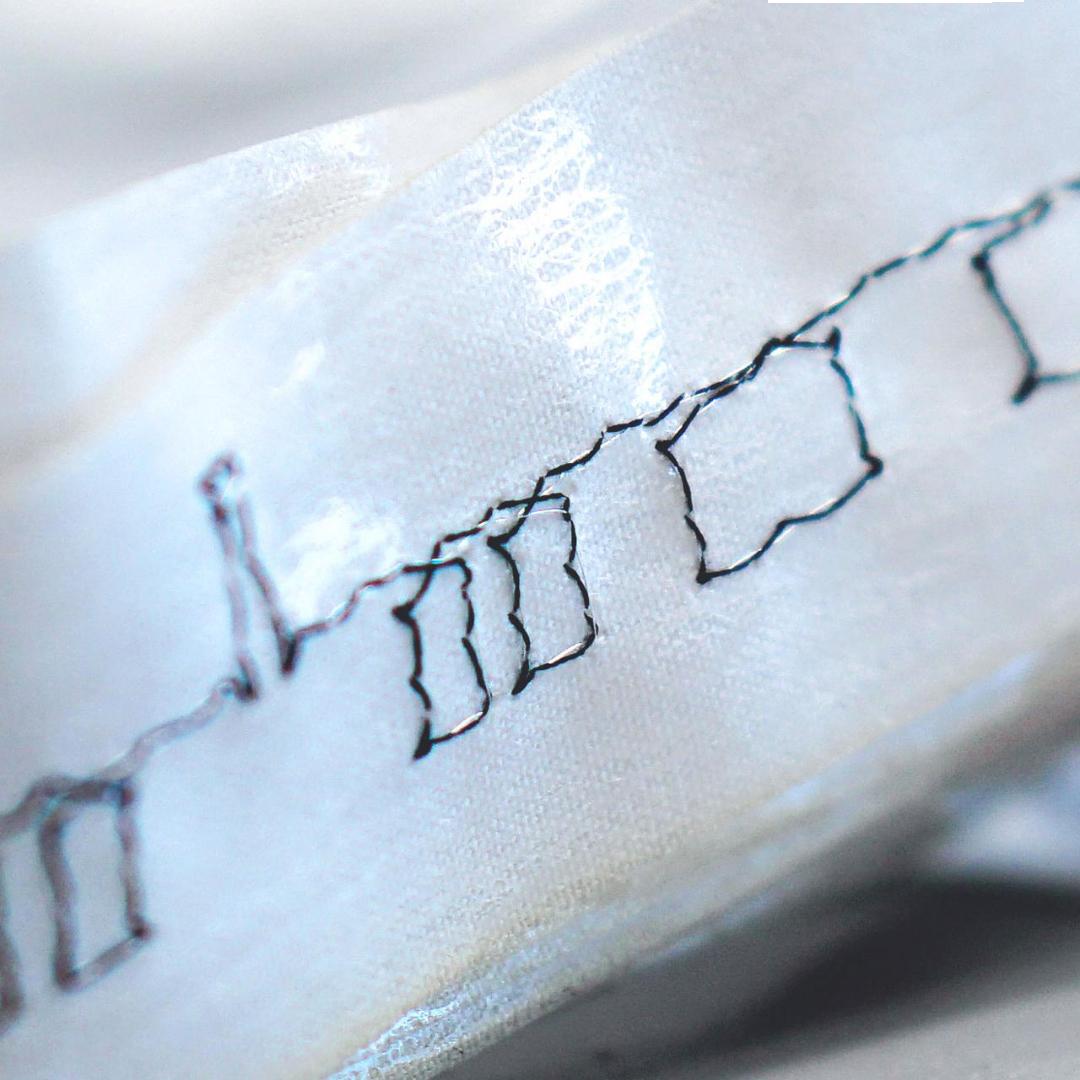
Using CNC embroidery technology (Tailored Wire Placement, TWP), Embro applies conductive threads or the finest wire strands directly to the desired substrate textile. The antenna structure becomes part of the textile, not a foreign component applied to it.
Flat, haptically neutral integration: The antenna lies flush with the fabric without bulging or stiffening it. Only the chip remains as a small, rigid element. Suitable for clothing, PPE, and medical textiles where comfort and patient safety are paramount.
High wash and media resistance: Embroidered ladder structures are a mechanically integral part of the textile. Depending on the thread material, carrier textile, and encapsulation method, the antennas can be designed for industrial washing cycles, drying, and chemical cleaning agents. Wash resistance is validated on a project-specific basis.
Precise frequency matching: Shape, dimensions, and connection points are tailored to your final product. Since the substrate material, chip, humidity, and installation situation influence the resonant frequency, we check and optimize the tuning together with you during the prototype stage. Without this step, the range in the final product remains a matter of chance.
Suitability for temperature and extreme ranges: Thanks to special wires (e.g., stainless steel strands) and heat-resistant substrates (aramid, fiberglass), textile antennas are also suitable for elevated temperatures. The temperature limit of the overall assembly is generally determined by the chip and its connection to the conductor, not by the antenna itself.